
Best Solar Panels for Van Conversion 2026: Top 5 Picks
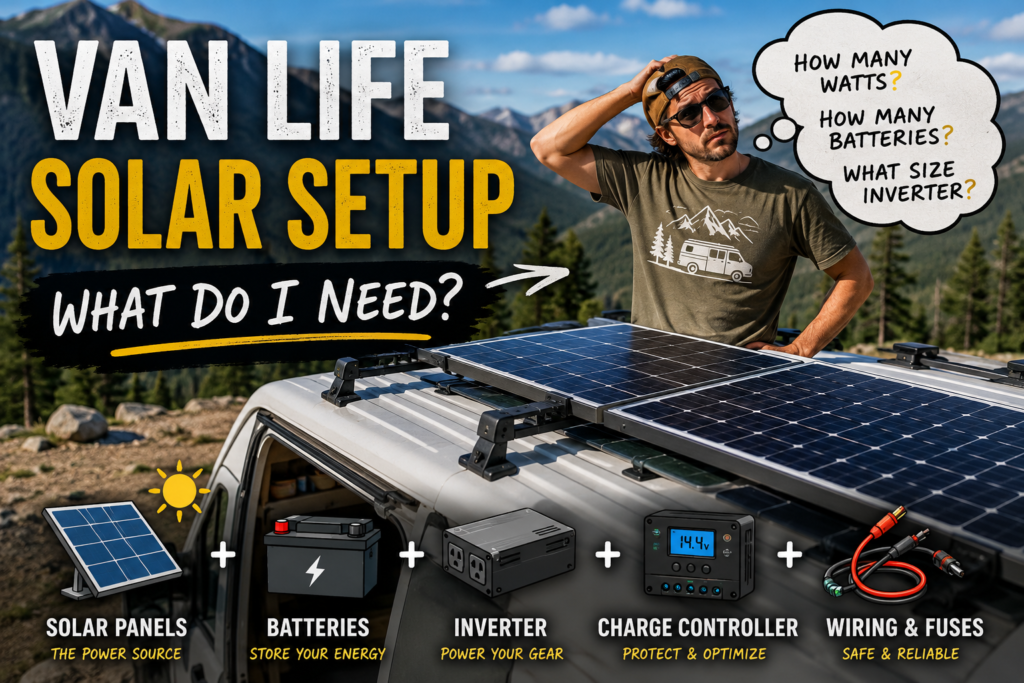
Finding the best solar panel for van conversion 2026 can mean the difference between thriving off-grid and scrambling for a campground hookup. Whether you’re a full-time van dweller, a remote worker living mobile, or a weekend warrior chasing sunsets, a reliable solar setup is the heart of your electrical system. The market has evolved fast — panels are lighter, more efficient, and easier to install than ever before. In this guide, we’ve done the heavy lifting, researching and comparing the top-rated options to help you build a system that keeps your devices, fridge, and lights running no matter where the road takes you.
[IMAGE: solar panel efficiency diagram outdoors]
What to Look for in a Solar Panel for Van Conversion
Before investing in a solar setup, you need to understand what makes a panel right for van life specifically. Unlike rooftop home installations, van panels face unique challenges: limited roof real estate, vibration from driving, extreme temperature swings, and the need for maximum watts-per-square-foot output.
Panel type matters enormously. Monocrystalline panels lead the pack for van conversions because they deliver the highest efficiency (typically 20–23%) in the smallest footprint. Polycrystalline panels cost less but require more surface area for the same output — a tough trade-off on a van roof. Flexible panels are tempting for curved roofs but tend to degrade faster and run hotter, reducing long-term performance.
Key specs to evaluate include: wattage output, open-circuit voltage (Voc), short-circuit current (Isc), panel dimensions, weight, and temperature coefficient. Also look for IP67 or higher waterproofing ratings, robust frame construction for road vibration, and compatibility with your charge controller (MPPT controllers pair best with higher-voltage panels). For deeper guidance on sizing your system, check out Renogy’s solar sizing guide and The Wirecutter’s outdoor power coverage.
[INTERNAL LINK: best lithium batteries for van life]
[IMAGE: van conversion solar setup roof]
Top 5 Best Solar Panels for Van Conversion 2026
[IMAGE: Renogy 200W monocrystalline solar panel]
1. Renogy 200W 12V Monocrystalline Solar Panel
Why it’s recommended for van lifers: Renogy has been the go-to brand in the van life community for years, and the 200W monocrystalline panel continues to earn that reputation. It strikes an ideal balance between output and roof footprint, and it’s built tough enough to handle road vibration, rain, and UV exposure year after year. The pre-drilled holes make mounting straightforward, and it plays nicely with Renogy’s own MPPT controllers for a plug-and-play ecosystem.
Key Specs:
- Wattage: 200W
- Efficiency: 21.3%
- Dimensions: 58.3 x 26.4 x 1.38 in
- Weight: 18.08 lbs
- Cell Type: Monocrystalline
- Waterproof Rating: IP65
- Warranty: 5-year material, 25-year power output
Pros:
- ✅ Excellent efficiency-to-price ratio
- ✅ Durable anodized aluminum frame handles road vibration
- ✅ Huge ecosystem of compatible Renogy accessories
Cons:
- ❌ Larger size can be tricky on smaller vans (Transit Connect, etc.)
- ❌ IP65 (not IP67) — less ideal for extremely wet climates
- ❌ Cable management requires extra planning on curved roofs
Who it’s best for: Full-time van lifers with a standard Transit, Sprinter, or Promaster who want a proven, scalable system from a trusted brand.
[IMAGE: Jackery SolarSaga 200W panel portable]
2. Jackery SolarSaga 200W Solar Panel
Why it’s recommended for van lifers: The Jackery SolarSaga 200W is a standout for van lifers who also use a portable power station (like the Jackery Explorer series) as their primary power hub. Its semi-flexible design and foldable form factor make it incredibly versatile — prop it up outside your van to chase the sun while you park in the shade. The ETFE coating is more durable than standard laminate, making it a smart pick for those who want flexibility without long-term degradation.
Key Specs:
- Wattage: 200W
- Efficiency: 24.3%
- Dimensions: 21.3 x 17.9 x 1.18 in (folded)
- Weight: 14.33 lbs
- Cell Type: Monocrystalline with ETFE coating
- Waterproof Rating: IP68
- Warranty: 2-year product
Pros:
- ✅ Industry-leading 24.3% efficiency
- ✅ IP68 waterproofing — best-in-class weather resistance
- ✅ Portable and deployable off the van for optimal sun angle
Cons:
- ❌ Higher price point than rigid competitors
- ❌ Not ideal for permanent roof mounting without additional hardware
- ❌ Shorter 2-year warranty vs. traditional rigid panels
Who it’s best for: Van lifers who use a portable power station setup or those who want to deploy panels on the ground while parked in shade.
[IMAGE: EcoFlow 160W rigid solar panel]
3. EcoFlow 160W Rigid Solar Panel
Why it’s recommended for van lifers: EcoFlow has rapidly earned trust in the van life community by delivering premium build quality at a competitive price. The 160W rigid panel is perfect for smaller van roofs or as an expansion panel in a multi-panel array. Its tempered glass surface is impact-resistant, and the IP68 rating makes it one of the most weather-tough rigid panels available in 2026. EcoFlow’s ecosystem also integrates seamlessly if you’re running their Power Kits — a popular all-in-one van electrical solution.
Key Specs:
- Wattage: 160W
- Efficiency: 22%
- Dimensions: 47.2 x 21.5 x 1.2 in
- Weight: 12.1 lbs
- Cell Type: Monocrystalline
- Waterproof Rating: IP68
- Warranty: 5-year product, 25-year power output
Pros:
- ✅ IP68 waterproofing on a rigid panel — rare and valuable
- ✅ Compact footprint suits shorter van roofs
- ✅ Seamless integration with EcoFlow Power Kits
Cons:
- ❌ Lower wattage means you may need two panels for heavy power users
- ❌ Best value realized within the EcoFlow ecosystem
- ❌ Limited third-party bracket compatibility compared to Renogy
Who it’s best for: Van lifers with smaller roofs or those already invested in the EcoFlow ecosystem looking for a weatherproof expansion panel.
[IMAGE: Rich Solar 100W monocrystalline panel]
4. Rich Solar 100W Monocrystalline Solar Panel
Why it’s recommended for van lifers: Rich Solar’s 100W panel is the best value-per-dollar pick for van lifers on a budget or those building out a modular system panel by panel. Despite its lower price, it doesn’t cut corners on quality — the Grade A monocrystalline cells deliver consistent performance, and the heavy-duty anodized frame holds up on rough roads. Run two or three in series with an MPPT controller and you’ve got a robust 200–300W system without breaking the bank.
Key Specs:
- Wattage: 100W
- Efficiency: 21%
- Dimensions: 40.7 x 20.9 x 1.18 in
- Weight: 14.4 lbs
- Cell Type: Monocrystalline (Grade A)
- Waterproof Rating: IP65
- Warranty: 5-year product, 25-year power output
Pros:
- ✅ Outstanding value for budget-conscious van builders
- ✅ Scalable — add more panels as your budget grows
- ✅ Grade A cells ensure consistent output over time
Cons:
- ❌ Lower wattage per panel requires more panels for high-draw setups
- ❌ IP65 rating is adequate but not the best in wet climates
- ❌ Less brand recognition means fewer community resources and tutorials
Who it’s best for: Budget builders, first-time van converters, or anyone building a modular system they plan to expand over time.
[IMAGE: Newpowa 200W flexible solar panel van]
5. Newpowa 200W Flexible Solar Panel
Why it’s recommended for van lifers: For van builders with curved roofs — think older Ford Econolines or custom roof raises — a quality flexible panel is often the only viable option. Newpowa’s 200W flexible panel uses high-grade PERC monocrystalline cells with an ETFE surface coating that resists heat and UV degradation far better than standard PET-coated flexibles. It bends up to 30 degrees, weighs next to nothing, and sits flush against the roof — reducing wind drag on highway drives.
Key Specs:
- Wattage: 200W
- Efficiency: 22.8%
- Dimensions: 57.9 x 26.8 x 0.1 in
- Weight: 6.6 lbs
- Cell Type: PERC Monocrystalline
- Waterproof Rating: IP67
- Warranty: 2-year product, 10-year power output
Pros:
- ✅ Ultra-lightweight at just 6.6 lbs — great for high-top builds
- ✅ ETFE coating reduces heat buildup and lasts longer than PET
- ✅ Conforms to curved roofs without special mounting hardware
Cons:
- ❌ Shorter warranty than rigid panels (2-year product)
- ❌ Efficiency drops faster over time than rigid panels
- ❌ Adhesive mounting can trap heat, reducing cell efficiency
Who it’s best for: Van builders with curved or irregular roofs, ultralight builds, or those prioritizing stealth aesthetics with a flush roof profile.
[IMAGE: solar panels side by side comparison]
Comparison Table: Best Solar Panels for Van Conversion 2026
| Panel | Wattage | Efficiency | Weight | Type | IP Rating | Warranty | Best For |
|---|---|---|---|---|---|---|---|
| Renogy 200W Mono | 200W | 21.3% | 18.1 lbs | Rigid Mono | IP65 | 25-yr power | Full-time van lifers |
| Jackery SolarSaga 200W | 200W | 24.3% | 14.3 lbs | Foldable ETFE | IP68 | 2-yr product | Portable power station users |
| EcoFlow 160W Rigid | 160W | 22% | 12.1 lbs | Rigid Mono | IP68 | 25-yr power | Small roofs, EcoFlow users |
| Rich Solar 100W | 100W | 21% | 14.4 lbs | Rigid Mono | IP65 | 25-yr power | Budget builders |
| Newpowa 200W Flex | 200W | 22.8% | 6.6 lbs | Flexible PERC | IP67 | 10-yr power | Curved roofs, stealth builds |
How to Choose the Right Solar Panel for Your Van Conversion
Start with your power budget, not your panel budget. Before buying any panel, calculate your daily watt-hour (Wh) consumption by adding up every device you run and how many hours per day you use it. A 12V compressor fridge uses roughly 30–50Wh per hour. A laptop draws 45–65W. Add a fan, phone charging, and LED lights, and most van lifers need 300–600Wh of solar input per day to stay comfortable. That translates to roughly 200–400W of panel capacity depending on your location and sun hours.
Match your panel type to your roof reality. If you have a flat roof with plenty of space, go rigid monocrystalline — it will outperform flexible panels in the long run. If your roof curves significantly or you’re doing a stealth build, a high-quality ETFE flexible panel like the Newpowa is a reasonable compromise. Avoid the cheapest flexible panels on the market — PET-coated panels degrade rapidly and can bubble off the roof within two years.
Don’t forget the full system cost. The panel is just one piece. Budget for a quality MPPT charge controller (Victron SmartSolar is the community favorite), proper wiring sized for your amperage, and fused connections throughout. Skimping on the balance of system while buying premium panels is a false economy. [INTERNAL LINK: best MPPT charge controllers for van life] — a well-matched controller can recover 10–30% more energy from the same panel compared to a cheap PWM controller.
Frequently Asked Questions About Solar Panels for Van Conversion
How many watts of solar do I need for my van conversion?
Most van lifers with a compressor fridge, lighting, phone/laptop charging, and a fan need between 200W and 400W of solar. If you work remotely with a desktop setup, run a CPAP machine, or frequently stay in cloudy climates, lean toward 400–600W. Start by calculating your daily watt-hour needs, then divide by average peak sun hours in your region (typically 4–5 hours in the continental US) to estimate the panel wattage required.
Are flexible solar panels worth it for van life?
Flexible panels are worth it if your roof curves significantly or you’re prioritizing a stealth, flush-mount look. However, they do trade off long-term performance — flexible panels tend to run hotter and degrade faster than rigid panels. If you go flexible, invest in ETFE-coated panels (like Newpowa) rather than cheaper PET-coated alternatives, and avoid fully bonding them flat to the roof to allow some airflow underneath.
What’s the difference between MPPT and PWM charge controllers for van solar?
MPPT (Maximum Power Point Tracking) controllers are significantly more efficient than PWM (Pulse Width Modulation) controllers — they can recover 10–30% more energy from your panels. MPPT controllers are also better suited for higher-voltage panel strings, which reduces wire thickness requirements and power loss over long cable runs. For most van conversions with 200W or more of solar, an MPPT controller (like the Victron SmartSolar 75/15 or 100/30) is the clear choice despite the higher upfront cost.
Can I install solar panels on my van myself?
Yes — van solar is one of the most DIY-friendly electrical projects available, and thousands of van lifers complete it without professional help. The key is proper planning: size your wire correctly for the amperage, use appropriate fuses at every connection point, and waterproof your roof penetrations thoroughly with self-leveling lap sealant. Resources like the Explorist.life wiring guides are free, detailed, and built specifically for van conversions. When in doubt, consult a licensed 12V electrician for the battery bank and inverter connections.
How do I mount solar panels on a van roof without leaks?
The most reliable method is using Z-brackets or tilt mounts with stainless steel hardware, drilling through the roof and sealing penetrations with Dicor self-leveling lap sealant (the same product used on RVs). Apply a generous bead around every bolt and let it cure fully before driving. Alternatively, many van lifers use non-penetrating mounting solutions with VHB tape and aluminum extrusions, though these work best on flat, clean metal surfaces and may not hold in extreme conditions. Inspect your sealant annually.
[IMAGE: van parked mountain sunset solar roof]
Conclusion: The Best Solar Panel for Van Conversion in 2026
Choosing the best solar panel for van conversion 2026 comes down to your roof space, power needs, and budget. For most full-time van lifers, the Renogy 200W Monocrystalline remains the gold standard — proven, affordable, and backed by a massive support community. If you’re after top-tier efficiency and portability, the Jackery SolarSaga 200W earns its premium price. Building on a budget? Stack two Rich Solar 100W panels. Whatever you choose, invest in quality from the panel to the controller — your off-grid freedom depends on it.